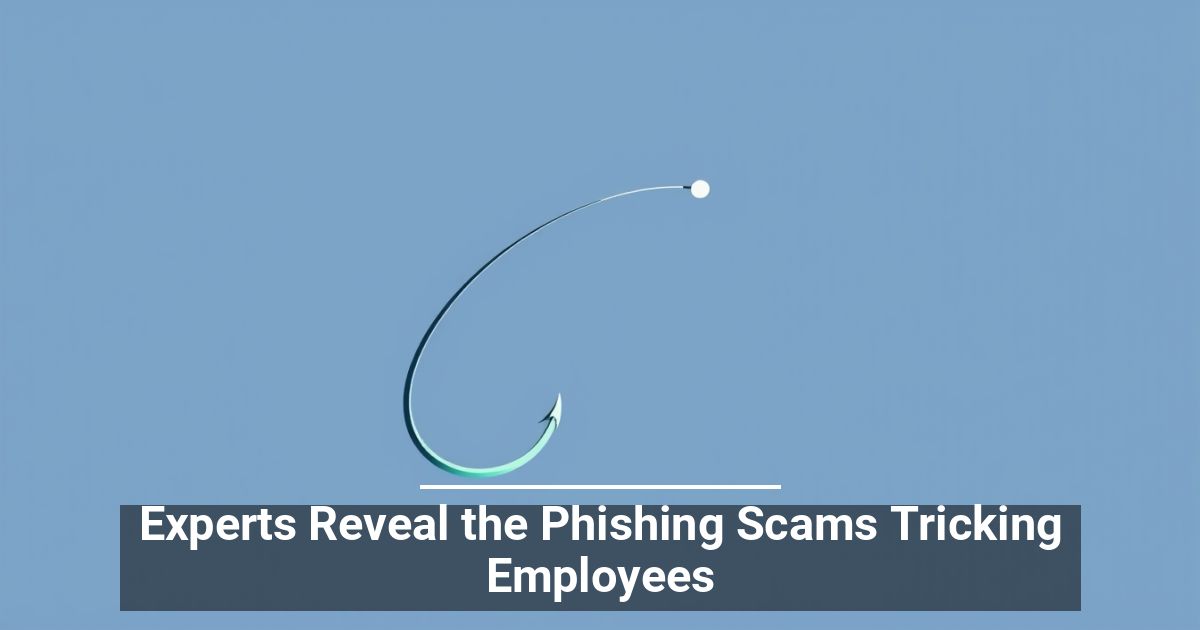
 Are you confident that everyone in your team can spot a convincing phishing email? Recent research reveals that phishing scams increasingly exploit familiar workplace topics to trick unsuspecting staff. Some are surprisingly effective, even without sophisticated technical tricks.
What Makes a Phishing Email So Convincing?
Most email phishing attacks follow a familiar formula. Cybercriminals impersonate trusted sources to trick recipients into clicking malicious links or revealing confidential information. There's a focus on social engineering tactics that exploit human behavior rather than technical vulnerabilities.
The question is, why do certain messages work better than others? To investigate, cybersecurity company Kaspersky analyzed anonymized data from its Phishing Simulator, which tests how employees respond to fraudulent messages. The findings suggest that familiar workplace subjects can prove particularly persuasive, even among employees who know the warning signs.
Which Phishing Scams Are Fooling Employees?
Kaspersky identified five categories with high click-through rates in simulated attacks, and we recommend warning your team about them.
AI and Technology Announcements
Leading the list at 45%, technology-themed emails often capitalize on curiosity about new software and AI tools. An announcement about an exciting new workplace feature may look harmless, especially when employees regularly receive legitimate technology updates.
Healthcare and Insurance Notices
Messages concerning medical benefits or insurance matters averaged a 28% click rate. One simulated email about a sanitary inspection report was clicked by 92% of recipients, suggesting that certain official-looking notices can seem persuasive.
IT Policies and Compliance Alerts
Emails about mandatory policy changes and security notices achieved a 26% click rate, as they often impersonate IT departments and pressure employees to follow instructions. A fraudulent password verification request, for example, may lead to credential theft.
Gifts and Promotional Offers
Unfortunately, no one can resist a good freebie. Emails promising rewards averaged a 24% click rate. One simulated invitation to wear a national football team's jersey for a chance to win a prize attracted 66% of recipients.
HR and Corporate Communications
Internal announcements averaged 22%, particularly those involving sensitive workplace matters. Attackers may impersonate HR personnel or executives to exploit employee trust. Similar impersonation techniques also appear in business email compromise schemes that target company finances.
How Can You Strengthen Your Defenses Against Phishing?
Knowing which phishing scams attract attention is useful, but employee cybersecurity awareness shouldn't be your only defense. Consider the following practical safeguards:
- Strengthen email filtering: Deploy security tools that flag suspicious senders and block dangerous messages before they reach employees.
- Block suspicious files: File-type restrictions help stop malicious email attachments, while updated endpoint protection reduces malware risks.
- Protect employee accounts: Enable phishing-resistant multifactor authentication wherever practical to reduce the risk of unauthorized logins.
- Double-check unusual requests: Unexpected payment instructions or sensitive information requests warrant verification through a separate, trusted communication channel.
- Make reporting simple: Employees should have an easy way to flag suspicious messages without fear of punishment.
Even experienced workers occasionally make mistakes. The strongest defense against phishing scams combines informed employees with effective security controls and a workplace culture that encourages verification.